Showing posts with label Italy. Show all posts

Wednesday, 18 November 2020

Book Review: Dark Valley, Piers Brendon


NB: This is one of my occasional archival posts, regarding a book I read and reviewed years ago, but haven't posted here, that I thought might be of interest.

A small departure here in that this not strictly a book about WWII, as such, but the dark decade of the 1930s, that prepared the way. I won't go into any detail regarding the contents. There are lots of decent reviews and synopses to be found online. I simply want to add my voice to the general chorus of acclaim this book has deservedly garnered.  

Like William Shirer's Rise And Fall Of The Third Reich this is sweeping, compelling history that really draws you in. The kind of thing that'll threaten to end your fiction reading. Why read fiction when real world events are so massively interesting? The 1930s are a particularly fascinating decade, with totalitarian regimes, be they fascist or communist, gaining a worldwide foothold unparalleled before or since.

As others elsewhere have observed, Brendon has an excellent writing style, and is truly masterful at weaving together complex narrative and small anecdotal details. What a period the first half of the C20th was, and - leaving aside WWI - what a period the 1930s were. With Stalin, Franco, Hitler, Mussolini, the Hawkish Japanese military, the latter already at war in China, and more besides, all sandwiched between the cataclysms of two world wars! 

I borrowed this from a friend many years ago, and liked it so much I had to get my own copy after reading his, in a repeat of what had already happened with the aforementioned Shirer book.

The material relating to Japan is, I find, particularly fascinating, as so much historical literature on this period and the two world wars is so Euro-centric. Also the militarism of Japan differed markedly from that of Russia, Germany and Italy, in that it was much more broad based, rather than focussing on a charismatic figurehead. Indeed, the Japanese emperor seems to have been carried along on a martial current that flowed through a whole class (primarily the officer class), ultimately more or less saturating the whole culture.

One specific episode amongst the many in this brilliant book that really struck me - haunted me even, for a little while after reading it - was the horror of Magnitogorsk, in Stalinist Russia. The name of the city alone sounds both awesome and terrifying! A hint of what was happening can be inferred from the fact it was declared a closed city, i.e. off limits to foreigners, in 1937. But I won't say why here. Buy this superb book and read about it yourself.

Friday, 28 August 2020

Book Review: Tank Attack at Monte Cassino - Jeffrey Plowman


Although my reading has ground almost to a halt recently, I did read this excellent book a few months back. And finally I'm getting round to posting a review!

A fascinating account of a little known action in the long arduous campaign to take Monte Cassino. The somewhat crazy idea of outflanking the dominating heights of Cassino with a tank force - an undertaking which required the building of a road - in terrain highly unsuited to armoured warfare, ended up being something of a shambolic failure.

The attacking force is a mixture of Indians, New Zealanders, Americans and British - French and Poles also figure in the bigger picture! - fighting Germans (Italy having capitulated by this point). The book draws a vivid compelling picture of events, enlivened by firsthand accounts and illustrated with contemporary photos. 

A segment at the end covers the battlefield as it is now, for those interested in visiting. I'd have preferred more/better maps, as following the action during the narrative isn't always easy. Several appendices add further supporting info. 

All in all, an impressive and fascinating work. I'm left wanting to read more about the whole Cassino campaign. Thoroughly enjoyable!

Wednesday, 15 May 2019

Book Review: Dark Valley, Piers Brendon


NB This is one of my archival posts, re a book I read aeons ago!

There are a number of detailed reviews of this book online already, so I won't go into any real detail regarding the contents, as it'd be fairly redundant. I simply want to add my voice to the chorus of approval. Like William Shirer's justly celebrated Rise And Fall Of The Third Reich this is sweeping, compelling history that really draws you in. The kind of thing that'll threaten to end your fiction reading. Why read fiction when real world events are so massively interesting?

These three would be scary enough individually. But together?*

The 1930s were, of course, the crucible of WWII, with extreme nationalist governments taking over ever larger swathes of the world: Italy, Spain and Japan were joined in this decade by Germany, and all these major powers can be added to the giants of Russia and, to a lesser extent, China. There was the fallout of worldwide recession, and all around the world, but most surprisingly perhaps, in the 'developed' West, liberalism and democracy were in crisis.

As others have noted elsewhere, Brendon has an excellent writing style, and is truly masterful at weaving together complex narrative and small anecdotal details. What a period the first half of the C20th was, with all this and more sandwiched between the cataclysms of two world wars! I borrowed this from a friend many years ago, and liked it so much I had to get my own copy after reading his (in a repeat of what had already happened with the aforementioned Shirer book).

The material relating to Japan is, I find, particularly fascinating, as so much historical literature on this period and the two world wars is so Euro-centric. Also the militarism of Japan differed markedly from that of Russia, Germany and Italy, in that it was much more broad based, rather than being focussed on a singular charismatic figurehead. Indeed, the Japanese Emperor seems to have been carried along on a martial current that flowed through a whole class (the officer class), ultimately more or less saturating the whole culture.

This '30s photo captures the whiff of 'horror film' around the development of Magnitogorsk. 

One specific episode amongst the many in this brilliant book that really struck me - haunted me even, for a little while after reading it - was the horror of Magnitogorsk (just the name sounds balefully ominous!), in Stalinist Russia, which was declared a closed city, i.e. off limits to foreigners, in 1937. I won't say why. Buy this superb book and read about it yourself.

* And of course there was Franco in Spain, the militants behind a Emperor Hirohito in Japan, and many lesser tin-pot tyrants in areas like the Balkans.

----------
I found an interesting article about Magnitogorsk here.

Thursday, 9 May 2019

Book Review: Tiger I, Southern Front, 1942-45, Dennis Oliver (Tank Craft)


It's interesting that whereas there's currently just the one book in the current Tank Craft series on the T-34 or Sherman, covering these vehicles over the entire war, some German armour is getting much more detailed treatment, as exemplified by the title under review in this post.

Dennis Oliver seems to have his own slightly different m.o. when it comes to his contributions to this very useful series from Pen & Sword. Most of the Tank Craft titles I've read by other authors follow a fairly standard format, whereas Oliver instead uses a series of his own devices, such as timelines, unit histories, and organisational schematics, etc.

A Tiger I in Tunisia.

If you are, as I am, a Panzer nut, then this is both a blessing and a curse: it's a blessing because more detail is great. It's a curse because it entails greater expenditure. There's also the matter of what kind of info you're after, and which approaches most chime with ones own tastes. Oliver's idiosyncratic approach is fine with me. Indeed, by and large I really like it. This said, the degree or depth of detail is pretty hardcore. And, whilst they're useful references, the timelines he frequently employs are, for me, quite hard going.

Certain key parts - the colour profiles, under the heading Camouflage & Markings - and the Model Showcase and Modelling Products segments are pretty much as per all the Tank Craft titles. Most of the models showcased in these titles, are 1/35, with just the occasional 1/48, 1/16 or - my preferred scale - 1/72. On this occasion, whilst the Products section mentions numerous 1/72 and 1/76 kits from several manufacturers, none are featured in the Showcase chapter.

A Tiger crew engaged in repairs in the field, Italy.

Of the theatres covered here, which are North Africa, Sicily and Italy, it's the last two that interest me most, and Italy in particular. The terrain which was being fought over, and the camouflage and markings of the materiel are all, for my money, more interesting than the dusty/sandy monochromes of the North African desert war.

All in all another solid chunk of highly useful/enjoyable stuff for us Panzer freaks. Love it!

Tuesday, 12 February 2019

Book Review - Images of War: M7 Priest, David Doyle


I'm beginning to gather a reasonable collection of these Images of War titles. When I bought Sherman Tank, by Gavin Birch, to support my concurrent 1/72 kit builds, I was a bit disappointed , as it was mostly Shermans in British service (which the title didn't make clear), and whilst the images were okay, the text was less so.

This time around I got the book first and, loving it, then went out and bought a couple of kits. First off, this is a better put together book anyway, being better written, very clearly, simply and well structured, and appropriately (not to mention copiously/richly!) illustrated. As befits a title from a series called Images of War, the pictures are fabulous.

M7 firing on German positions near Ribeauville, on the Rhine, France, Dec' '44.

Carentan, France, 1944.

The text and images start with a written introduction to the subject, followed by pictures and history of the first trial type (a model of which I intend to build, based on the superb visual ref contained herein). Words and imagery then move through the various production models/variants, based around the various orders placed by the US military with several contractors, before moving to descriptions, written and photographic, of the M7 in the field.

The M7 saw service in North Africa, Italy, the Invasion of Europe and the Pacific, and there is excellent material here from all theatres. There's one rear-view pic of a British mortar carrying variant, and mention of the Kangaroo personnel-carrier type, but no. pics of the latter. The Priest's development and deployment by the US continued into the Korean War, in the early '50s, which Doyle covers. 

An M7 in Luzon, The Phillipines, June, '45.

A nice colour pic from '43, showing a Priest firing during training.

As well as a few WWII colour pics there are a generous selection of crisp full colour photos of surviving examples, adding to the already rich arsenal of visual reference. The evolution of this vehicle is superbly and compellingly communicated. This has, quite unexpectedly (as I generally favour German WWII stuff) become my favourite title, thus far, in the Images of War series.

I liked it so much I immediately went out and bought a couple of Revell 1/76 kits of the M7 Priest, from a friendly local model seller. 

Okinawa, May, 1945. Note the spare track used as armour.

M7 Priest dug in, to achieve higher gun elevation, Kleinblittersdorf, Germany, Dec. '44.

---------------
 More Pics!

This is not David Doyle's first book on this subject. Pictured below is the cover of a Squadron Signal publication he did on the same subject.

A previous publication by Doyle on the same topic.

As mentioned above, I enjoyed this so much I went out and bought some models, and during research for my model and this review, I came upon a load more pics not used in the books, some of which come from the same series of pics used here.


Preparing artillery rounds for firing.

Inside the fighting compartment.

Disembarking a Priest from a landing craft.


Hosing down the vehicle.

Nice view of the manned machine gun.

Bogged down in mud.


What are these doodads?

This appears to be a still from a colour film of an M7 Priest.

A nice view of a Priest's driver.

The Priest featured in Life magazine.

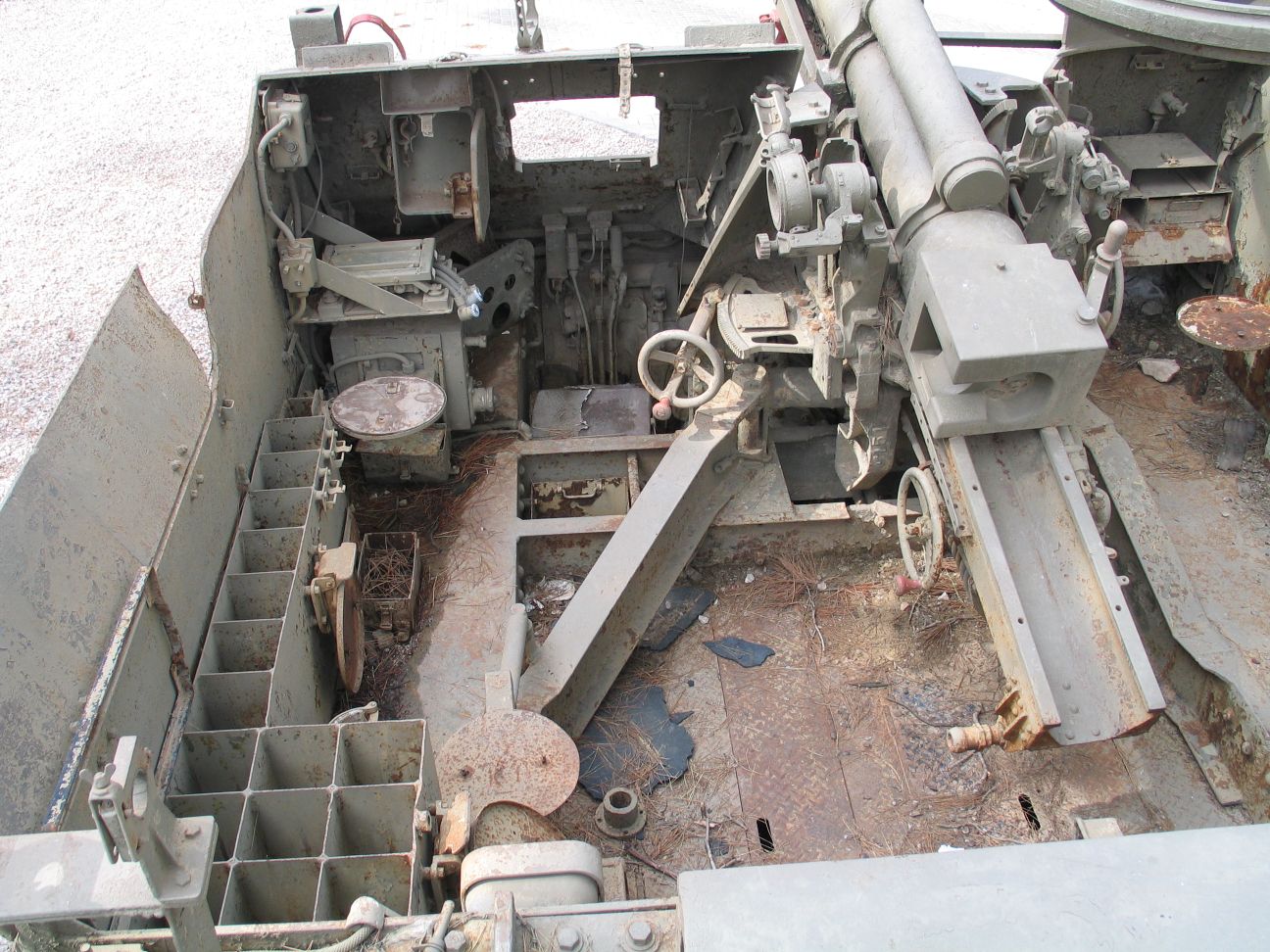
Contemporary photo of a surviving M7 Priest's interior.


Amphibious training in California.

An M7 Priest alongside a recovery vehicle.

A Priest being serviced during firing.

In Action in Italy.


Tuesday, 27 November 2018

Book Review: Marengo, T.E. Crowdy


In this excellent and exciting new book on the battle of Marengo by Terry Crowdy, published by Pen & Sword, the 'victory that placed the crown of France on Napoleon's head', as Kellerman had it (his resounding phrase also giving the book it's subtitle), we have Napoleonic history - always colourful and exciting - at its most dramatic.

The story starts with an introduction to the role of espionage in the events of 1799, a bad year for the French in Italy, before moving to the coup of Brumaire, which left Bonaparte at the helm of both the French state and the army, as First Consul. The cloak and dagger doings of the mysterious double agent Gioelli loom large in this account of events, and are appropriately intriguing.

LeJeune's fabulous painting.

Events leading up to the battle are no less dramatic, with Napoleon rather naughtily assembling a secret army, at Dijon, over which he will have personal (and unconstitutional) control, with the nominal gloss of Berthier as commander as the public fig leaf. The subsequent dramatic crossing of the Swiss Alps, and the logistical and tactical gambling that this involves, keep the excitement levels high, such that one is whisked along in the unfolding drama.

Another nice contemporary painting.

And, before one knows what has happened, rather like the men on the ground, from the humble soldiers (the memoirs of Coignet are already a useful and colourful resource) to the 'big hats' themselves, the battle of Marengo is underway. Seemingly almost accidentally, with neither side in full control of events, or with a full understanding of their opponents aims and objectives.

The death of Desaix, depicted on a rather handsome plate.

Once battle is underway, Crowdy relates the confusing ebb and flow of events with admirable clarity. And there are plenty of maps to help the reader track the potentially confusing unfolding drama. My only criticism of this book - and it's a criticism I would level at most contemporary military history books - is that, even where maps are provided, as they are in this case, they are rather plain and perfunctory looking if one compares them to the handsome old maps of yore (such as the gorgeous Alison maps partially reproduced below). And sometimes places mentioned in the text are not marked on the maps that are closest to hand. Meaning one is obliged to refer to other maps, or is left in the dark a little geographically.

Alison's attractive maps: phase one.

Phase two.

I'm still reading this, in the thick of battle, and loving it. I'll post the review anyway. But I may return to further fiddle with or augment this once I'm finished. In the meantime, however, this is highly recommended.
----------

Jacques Louis David's iconic Napoleon Crossing The Alps.

Ok, so I'm back to revise or update my review, having now finished this extremely impressive book.

When I posted the first part, I'd read as far as, guestimating somewhat, the point where the French were beginning to have to consider withdrawing. They'd given the Austrians a bloody nose, at the crossing of the Fontenone. But Austrian weight of numbers, and in particular artillery superiority, were beginning to tell.

As the French pull back, the further they retreat, the greater their predicament. Even an attack by the then Consular (as opposed to Imperial) Guard fails to stem the Austrian tide. The French are almost in rout, and the jubilant Austrians start relaxing their guard prematurely (elderly and reluctant C-in-C Melas declaring it's all over and he's off to bed!), when Desaix's troops arrive, and quite suddenly the fortunes of war are dramatically reversed.

Melas was in his seventies, when he led Austria against Napoleon.

The timely arrival of the French reinforcements galvanises the whole armies' resolve, disintegrating units reforming and returning to the attack. Having relaxed too soon, the Austrian centre collapses and gives way, and by late evening the French are back in possession of Merngo, athwart their enemies line of supply, with the cavalry of Kellerman and Murat harrying the Austrian rout as it flees
back towards the 'awful ditch' of the Fontenone, and beyond that the Bormida.

One of the chief factors in this sudden and disastrous turnaround, aside from the intrigues of Gioelli, was the lack of team spirit in the Austrian command. Whereas the French united behind Napoleon, and were quick to bounce back from setbacks, the Austrians bickered, failing to cooperate or support each other effectively, giving up quickly and looking to blame others.

Anton Von Zach, whose plans failed, was captured during the battle.

All in all, a terrifically exciting and informative read. And a useful addition to the enormous ever expanding literature on this colourful and endlessly fascinating era. Highly recommended.
----------

NOTES:

The author, Terry Crowdy.

Crowdy has a blog of his own, where you can read about his various activities, including the publication of this book (here).