Sunday, 5 May 2019

Kit Build/Review: Heller 1/72 Jeep (+ Academy Jeeps!)


After reading and reviewing the inaugural Land Craft book on the Jeep, I fancied making another, having already built one from the Allied & Axis light vehicles set by Academy, many moons ago. In an excess of zeal I bought the Academy set again anyway, so I can rebuild that one as well. You can't have too many Jeeps can you? I think in excess of 90,000 were built during WWII.

I had hoped to build both Jeeps today. Indeed, I almost set myself the challenge of building and painting them both in this one day. But what with a lazy Sunday lay in and the World Championship snooker as a distraction, that was a forlorn hope!

Prepping all the parts, laying them out ready to assemble.

Jeep assembled, trailer ready to go.

I decided to do the Heller Jeep sans hood, so it'll make a nice companion for the Academy ones. This meant fabricating the frame, from wire and plastic card, as the only supplied frame elements in the kit were for the hood up scenario.* The hardest part of doing that was keeping the frame components separate. A very fiddly process!

I also broke one of the hood attachments on the windscreen, whilst masking it. The masking is made trickier by the fact that aheller have included windscreen wiper detail in the windscreen part. I fabricated a new one from plastic card. It's a bit chunky. But I hope I'll be able to pare it down a bit. I also had to repair the MG-mounting post, in a very minor way. As it happens I think I'll leave that off the model anyway.

Heller Jeep alongside the already built Academy Jeep.

* This is a bit odd, 'cause if you build this with the MG deployed, then the hood needs to be down, yet they don't supply suitable parts for that iteration.

---------------
Day 2...

Academy Jeep #2

I've already built one of these Jeeps, but fancied making another. It's a nice clean moulding, and goes together nicely, but lacks one or two of the nice details the Heller kit has, such as the clear plastic headlights, or the wrap-around handles on the rear corners of the bodywork.

Parts prepped for assembly.

I've opted to leave the machine out again, so that's two for the spares box now.

Chassis first...

Body pan next...

And before you know it, done.

Loading with stowage...

I think I'll load this Jeep to the gunnels: just added two tarps and a box so far. But a load of jerry cans, and perhaps some scratch-built bits... maybe a toolbox? Hmmm... time for a break. Keep tabs on Trump vs. Higgins, in the Snooker final.

---------------
Yay, the Judd-ernaut won! I had hoped the final would be Gary Wilson vs. either Trump or Dave Gilbert. But as it was Trump vs. Higgins, I wanted Trump to get his first World Championship title. And what a game he played!

My next batch ready for undercoats and base-coats.

Anyway, back in Styrene-land, my two latest Jeeps are built, and a certain amount of clobber has been added. I thought I'd add some finishing touches and stowage to a couple of PSC Sherman's that had kind of stalled, so I could undercoat and base-coat a decent batch of models in one go tomorrow. 

Book Review: Helgoland, Aidan Dodson


From my initial reading of some of the dustjacket blurb I gather that the subtitle, Detailed In The Original Builder's Plans, denotes this as being part of a series from Seaforth, Pen & Sword's naval imprint, drawing upon original plans from the collection of the National Maritime Museum. 

I'm fascinated by war at sea. But I'm very virginal, when it comes to nautical affairs, so I'm not the most expert of judges on this topic. What I can see immediately, is that in respect of the images reproduced here, this is a five-star affair: chock-full of comprehensive and beautiful draughtsman's drawings of the Helgoland.

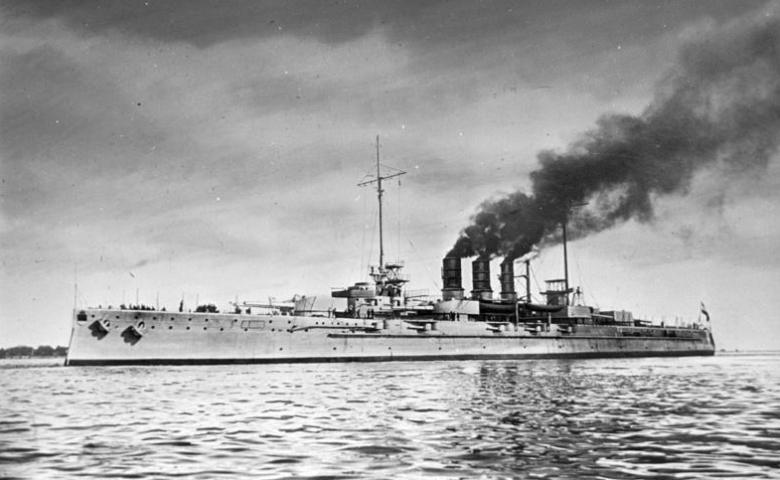
Construction of the Helgoland was completed and she entered service in 1909. She served throughout WWI, taking part in the famous battle of Jutland. After Germany's defeat England took custody of her, eventually selling her to be scrapped, in 1924. What a sad fate for such a monstrous beauty, and  what a waste of so much engineering work. But that's what happens to old ships, especially during/after wars.

SMS Helgoland (source: Wikipedia commons).*

I have to confess that the degree of detail provided here, which to me seems quite staggering, is a bit beyond what I require. Consequently I abandoned the complete reading of the text I initially embarked upon, about halfway through, with my head spinning, and instead skimmed through the remainder.

The largest of the reproductions is this four page spread profile.

What I spent more time on were the astonishingly detailed diagrams. Two of the pages fold out, giving two three-page spreads bookending one four-page spread. One could easily spend hours upon hours examining them. The many images run the entire gamut, detailing just about everything, and include plan, profile and sectional views. The combination of aesthetic  pleasure and awe at the engineering (not to mention admin, etc.) that I derive from studying these surprises me. What prodigious feats of construction/destruction we, the human animal, are capable of!

Whilst I'm morally confused about my fascination with war machines and war in general, I know that I'm totally blown away (wah-waah!) by the 'pure' engineering/tech aspects. Guns are great examples of this. Tanks are even better. But battleships? They have to be the ultimate, surely? Or maybe that'd be aircraft carriers... hmmm!?

There are detailed plan views of every deck, and way more besides.

Books like this often presume a certain degree of knowledge on the part of the reader. This one certainly does. Nevertheless, I feel such specialist publications really ought to include glossaries and the like, regardless. It'd be a great help to those readers of such works who, like me, might not yet know their binnacles from their bilge pumps.

However, that one gripe aside, the print quality and the number and detail of the schematic draughts used here are all very high. This level of detail is not, perhaps, for the mildly interested (or fainthearted). But I would imagine that for the nautical buff - and given how much a landlubber like me has enjoyed this - will love this.

26 spreads give 52 images detailing new station by station, from stem to stern.

Reading/perusing this has me determined to turn my hand to some form of naval modelling at some point soon. My only nautical kits are a 1/300 Dutch gunboat by Rod Langton, a U-Boat and the Bismarck (I forget yet make and scale if the latter; and poss you could also include my Arado AR-196 and Catalina flying boat models?), all currently in the attic I think. Anyway, back to the book: I'm no expert in this area, but I'd say this is an excellent book.

* As well as the lack of a glossary, there are no archival photos of Helgoland, which is a pity. Pictures of her under construction and in action would have made a terrific addition.

Saturday, 4 May 2019

Book Review: M29 Weasel, David Doyle (Images of War)


Another vehicle that's new to me, this time the M29 Weasel. Prolific veteran author on such subjects David Doyle (who's published a book on this vehicle before) gives a good account of the development of this interesting little vehicle, copiously illustrated with, in the main, contemporary images of surviving examples. 

US communications troops laying telephone wires on Okinawa, 1945.

These images are a superb resource for vehicle buffs, modellers, wargamers, etc. But I must confess, as great and as useful as they are, they tip the balance rather too far from the usual archival content these Images of War titles are named for. That's the chief reason I give this otherwise excellent book just fours stars.

A Weasel serving as a stretcher bearer, Belgium, '45.

Originally intended as a 'special' for use in a one-off raid in Norway, after the mission was cancelled the Weasel gradually evolved into a very versatile vehicle that would be used in almost all theatres,  working in heavy snow, thick mud, tropical conditions, in the water, dropped in planes or gliders, and serving on into postwar times, such as the Korean War.

Nice view of a Weasel' interior with weapons and ammunition.

Water is no obstacle to Weasels.

I'd like to have a few for my Allied WWII forces, but have only seen 1/35 and 1/48 kits. Can anyone tell me if there are any 1/72 models out there? Anyway, another highly informative and very interesting book in this very useful series.

Many have survived to be restored.

A nicely built 1/35 model.

Thursday, 2 May 2019

Book Review: Achilles & M10, Dennis Oliver (Tank Craft, 12)


This is number 12 in the excellent Tank Craft series, by the very diligent and thorough Dennis Oliver, and as with the Images of War title on the M7 Priest, I enjoyed this immensely because it's a vehicle/variant I'm less familiar with. 

Oliver's contributions to this series are quite distinctive on several counts: he goes into great detail on quite small chunks of particular campaigns, and uses certain presentation devices - campaign maps, timelines, unit histories and organisational schematics, etc. - to convey a quite prodigious level of detail.

This rather different approach means his contributions to the series don't follow the more standard format many others do, which usually start with the design and development history, whereas this starts with an intro on British army organisation, then looks at the campaigns in NW Europe in this late (44-45) stage of the war.

A British M10 'Achilles' on Sword Beach, D-Day.

And in turn this means that much of the technical data you encounter early on in the more standard format books in the series is at the back end of this book, in a chapter titled Technical Details and Modifications, where the other titles might more normally have the In Service and In Action chapter. So olivers kind of working almost exactly in the reverse order!

But the good news is that the book in no way suffers from the idiosyncratic change of form that Oliver favours, thanks to the lucidity of his writing and the well organised material. What remains in their standard places are three key segments: Camouflage and Markings (aka, colour profiles), the Model Showcase, and Model Products. These three sections are all excellent, as indeed the whole lot is.

Ramon Sagarra's exquisitely rendered 1/35 Italeri M10.

Another slightly unusual but welcome inclusion is the brief Aspects of British Army, which goes into explaining some of potentially confusing stuff about how the British Army, both in general and at this time, was/is organised. 

I have only one criticism of this otherwise near perfect book, which is that on page 63 the middle row of photos sports the wrong captions, which appear again, but this time correctly, under the bottom row of pictures as well. The result of this editorial/layout gaffe is that a series of pics of wheels are not explained, and instead we get two servings of info on tracks! This is a shame, and I deduct 1/2 a balkenkreuz for it. 

But, like all the Dennis Oliver contributions in this series that I've seen, and indeed the series as a whole, this is an excellent resource for tanks buffs in general, and modelmaking tank buffs in particular. Highly recommended.

German tankers examine a knocked out M10.


Book Review: M2/M3, ed. Robert Jackson (Land Craft, 2)


After the disappointments I mention in my review of the previous publication on the Jeep, it's great to be able to report that this, the second in the new Land Craft series, is back on track (boom-boom!). 

This iteration of these very useful publications follows the standard form - Design & Development, In Detail, Variants, Camouflage & Markings (aka 'colour profiles'), Model Showcase, Modelling Products, In Service & In Action - covering each aspect with a good balance of clarity and thoroughness. 

The archival and contemporary images are superbly chosen, conveying maximum info with great concision, and the colour profiles are excellent, and include front, back, side and plan elevations, for maximum coverage. The difference in quality between the rather poor illustrations of the Jeep in the previous title, and these - crisply detailed, terrifically coloured, and with nicely rendered shading/texturing - is very noticeable.

M3 mounting 75mm gun, Sicily, (1943?)

Whilst no 1/72 examples are included in the Model Showcase section - they're all 1/35, with the lone exception of one 1/16 example - they're much better covered in the Modelling Products segment, with mention made of PSC, the Italeri fast-build kits, Hasegawa and Academy kits. The old Airfix 1/76 is there as well. And they even cover the large range from Milicast, also in 1/76, a manufacturer I haven't seen mentioned in this section until now.

As is normal for me now, when I enjoy these books as much as I've enjoyed this one, I feel more than a little tempted to acquire a model or three and have a crack at building and detailing them, using the images herein as inspiration. Uh-oh... I can feel a trip to either the Ely model shop or Creative Models in Chatteris coming on!

---------------
Thanks to the middle of the black and white photos on the cover, of an M3 ambulance, I fancy making up one kit as this vehicle, as well as some more typical variants. So I tried to find that very photo, but couldn't. I did however find the following:

Possibly taken at the same photo-shoot as the image I can't find?

An example in context.

A contemporary survivor.

Looks fab!


Wednesday, 1 May 2019

Book Review: The Jeep, Lance Cole (Land Craft, 1)


With this title on the iconic Jeep, Pen & Sword launch a new series called Land Craft, a companion to their already well established Tank Craft series. The Jeep is an excellent place to start, being one of the most recognisable vehicles of WWII (and beyond). Indeed, it's iconic position is such that it's been used as the logo for the Land Craft series, in the top right corner of the cover.

I've been lucky enough to receive a new copy from the publisher, for review. I'm really chuffed to be getting to review a fair amount of books on a variety of Pen & Sword imprints. And thus far I've loved and been very impressed with pretty much everything I've read. So much so I've rated practically all of them around four to five stars. Alas, this title hits the first bumps on this particular road!

It's still a book worth having, primarily for the visual reference, and secondarily for the model-related sections. This said, the non-model related picture content is not up to the usual Tank Craft standards, mixing WWII period photos with more contemporary images apparently randomly, with too many of the latter. And within the latter there's too much repetition of images of the same vehicles.

A very well known image, of a Jeep in British North African service.

Tamiya's 1/35 kit helped cement (boom-boom!) the SAS image in our minds!

The colour profiles are also not as good as in other similar titles I've received from the Tank Craft line. On the plus side this volume does include aerial/plan views in the colour profile section, which most of the Tank Craft equivalents don't.

But where this particular title differs most is in the text, which is very poor, in my opinion. I mean no offence to author Lance Cole. He obviously loves his subject, and doubtless knows a lot about it. But it simply doesn't read well. I've struggled to about half-way through the written part, and given up. It's headache-inducingly prolix, meandering around aimlessly and constantly repeating information. It could be cited as a definition of the phrase 'lumpen prose'. 

Although the book is structured similarly to the Tank Craft series - listing the chapter titles shows this to be the case (Development and Design, The Jeep in Detail, Camouflage and Markings, Model Showcase, Modelling Products, In Service and in Action, Variants) - it doesn't read that way. Compared with the lucid, well-structured writing of, for example Dennis Oliver, this text is like treacle. Strict and severe editing is required. Judicious editing from what's here would probably reduce it by 50-60%. But it's so poor a total rewrite would be best.

Another Jeep, also in British service; is this Burma?

All the Jeeps in the Model Showcase section are 1/35th. It'd have been nice to see one or two in other scales. Anyway, in conclusion, I'd say that thanks to the imagery herein this is still worth having. But I'd forewarn potential purchasers/readers re the quality of the writing. 'Tis a pity that what will surely be a very useful series (I also have the next one, on the M2/M3 halftrack) gets off to a somewhat shaky start.

If you did think you might want to buy this, now is a good time, as both this and the M2/M3 title are currently reduced from the RRP of £14.99 to just £12.99, over at the Pen & Sword website.

---------------
NB: I used to write regularly for the now sadly defunct Drummer (UK*) magazine. I remember several occasions where the editor intervened to temper my criticisms, usually either on account of personal or professional connections between the subject and the mag. So, for example, I was asked to review a particular CD by a certain band (I forget who now, thankfully). I thought it was awful, and said so. However, our editor was trying to cultivate the drummer of this band as a potential contributor to the magazine. My review wasn't used. 

I also recall having to soften critiques - or finding them having been editorially softened for me - of products. What galled me most about the latter was that I was prevented from speaking the truth as I saw it, and usually re cheapo gear from big manufacturers, whereas there was a freedom to pan the little independent concerns, 'cause that wouldn't threaten advertising revenue unduly. I mention all this because I want it to be known that opinions expressed on my blog (at least by me, at any rate) are genuine.

* Not the US Drummer magazine, by the way, a gay leather/porn mag!

The following photographs include some great Jeep images... none of which feature in this book, alas:

Jeep goes airborne... yeehaw!

UK or Commonwealth soldiers posed as if thumbing a ride.

A US vehicle graveyard on Okinawa, '45.

Jeep ambulance. Not sure where this is, or what nation it's being used by?

Jeeps roll off the production line and onto the transport supply lines.

Maintenance work; is that an engine powered lathe? 

Another Jeep auditioning for the airborne!

Jeep ambulance. Note bullet holes in windscreen!

They sure made a lot of Jeeps!

Jeeps are sexy!


Cole meanders in and out of his timelines all over the place, one minute talking about wartime Jeep history, and often (too often for a book aimed at WWII Jeep modelling) talking about postwar Jeep stuff. But he doesn't include the rather amazing almost James Bond-esque image above.